IntroductionHe did not think of himself as a tourist; he was a traveler. The difference is partly one of time, he would explain. Whereas the tourist generally hurries back home at the end of a few weeks or months, the traveler, belonging no more to one place than to the next, moves slowly, over periods of years, from one part of the earth to another. A tourist accepts his own civilization without question; not so the traveler, who compares it with others, and rejects those elements he finds not to his liking. Paul Bowles Unfortunately for the world (or at least for stories about the world) there are not many travelers like this left. The ultra-rich who traveled to escape boredom; the embarrassing son shipped off on remittance; the expatriate artist disgusted with home and seeking inspiration in foreign lands. All of these have faded from our landscape. Their stories have, too. The homogenization of commerce and the ubiquitousness of American culture have made one place more or less like any other, catering to the tourist and leaving the traveler unable to elude ”his own civilization.” Or even distinguish it from any other.
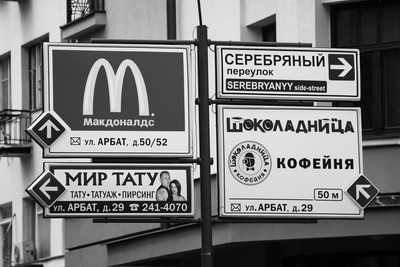
Perhaps a more modern and more useful distinction between tourist and traveler is one of attitude and intent. The tourists is passive; the traveler active. The tourist wants to be led; the traveler wants to get lost. The tourist seeks to observe; the traveler to participate. The traveler eschews homogenization and searches for unique experiences at the cost of comfort and conformity. The tourist wants a Coke at McDonald's. It’s this tourist who has overwhelmed the art of travel photography. The current generation may have avoided the stereotypical post-vacation slide show, only to replace it with the speed of digital imaging, the self-absorption of the selfie, and the banality of the blogosphere. Whatever the source, the result is too often the same: bland, boring, technically challenged pictures that say nothing about the place they were taken and less about the person who took them. But it doesn’t have to be that way. Photography is at once analogue and antidote to the tourist/traveler dichotomy. Good photography (and, to some degree, even the attempt at good photography) is both a path to and a result of being a true traveler.The authentic traveler is more tuned into their environment and more acutely aware of their surroundings. Especially more visually aware. This heightened sense is not blinded by repetition and dulled by boredom, but transforms seeing new things into seeing in new ways. And nothing could be more exciting for a photographer. The travel photographer is engaged in a scene in a way a more casual observer is not. She is more connected with the environment, the weather, the people. He is constantly looking at not just what is inside the frame, but what is around the corner or down the alley. The eye explores and entreats the feet to follow.
And there is no more universal license to explore than a camera. As a tool and an accessory, it is a paradox. It makes you stand out and blend in; it takes you out of the picture and puts you squarely in the environment. Its product is at once documentary and interpretive. It is but a means to an end; tool but not result, license but not realization. The result and realization, the photographs themselves, are not simply what was there, but what the photographer chose to show and how they chose to show it. They are Magritte's pipe. They are the story. Ultimately, these stories are not about recording an event or a person or documenting the past, but about refreshing our perception of where we are and where we are going. They are not static; they are influenced by our evolving history, informed by our current understanding, and imbued with our current place. The goal is to bring that heightened perception home and, in looking again at these pictures, remember their stories, renew that excitement, and revive that awareness here and now. Hal Shinn

Comments
No comments posted.
Loading...
|